What Is Qawwali? A Beginner’s Guide to Sufi Music’s Most Powerful Form
Qawwali is the devotional music of South Asian Sufism. Its origins, how a performance builds, the instruments, the great names and where to start.
Short answer: Qawwali is the devotional music of Sufism in South Asia. Rooted in the Chishti Sufi order and widely attributed to the poet Amir Khusrau (1253–1325), it sets mystical poetry to music for lead singers, a chorus that claps, harmonium and percussion. A performance builds slowly towards an ecstatic climax designed to move the listener spiritually.
Where does qawwali come from?
Qawwali grew out of sama, the Sufi practice of “listening” to music and poetry as a path to divine love. In the Indian subcontinent, the Chishti order embraced sama, and the form we now call qawwali is widely credited to Amir Khusrau, the Delhi Sultanate poet and devoted disciple of the Chishti saint Nizamuddin Auliya. Khusrau is said to have blended Persian and Indian musical ideas, singing within the framework of the Indian raga.
Historians debate how much of the modern form Khusrau personally created, and some argue that qawwali became a fully distinct genre centuries later. What is not in doubt is that many qawwal families trace their tradition back to him, and that qawwali at Sufi shrines such as the Nizamuddin dargah in Delhi has continued for centuries.
What is the word “qawwali” derived from?
“Qawwali” comes from qaul, an Arabic word for a saying. One of the most famous pieces associated with Khusrau, Man Kunto Maula, is built on such a saying, and the singers of qawwali are called qawwals.
How is a qawwali performance structured?
Every ensemble has its own approach, but many performances follow a recognisable arc:
- The opening. Instruments establish the raga and the mood, often with a short instrumental prelude on harmonium.
- The invocation. The lead singer introduces the poetry, sometimes with an unmetered passage that shows off the voice.
- The build. The rhythm enters, the chorus joins with clapping and refrains, and lines are repeated and improvised upon.
- The climax. Tempo and intensity rise until the music reaches a state of ecstasy, known as haal in the Sufi context.
Repetition is the engine of qawwali. A single line may be sung dozens of times, each repetition pushing the meaning deeper.
What instruments and voices make a qawwali?
- Lead vocalists (one or two) carry the poetry and the improvisation.
- The chorus answers the leads and keeps time with powerful hand-claps.
- Harmonium provides melody and drones, often played by the lead singers themselves.
- Tabla and dholak drive the rhythm.
Who are the great names of qawwali?
The 20th century made qawwali an international music. The Sabri Brothers, led by Ghulam Farid Sabri and Maqbool Ahmed Sabri, were among its most celebrated ensembles; they performed at New York’s Carnegie Hall in 1975 and are remembered for qawwalis such as “Tajdar-e-Haram” and “Bhar Do Jholi”. Nusrat Fateh Ali Khan carried the form to festival stages around the world. Today, families of qawwals on both sides of the border continue the tradition; the Sabri name itself is associated with the Sabiriya branch of the Chishti order.
How is qawwali changing today?
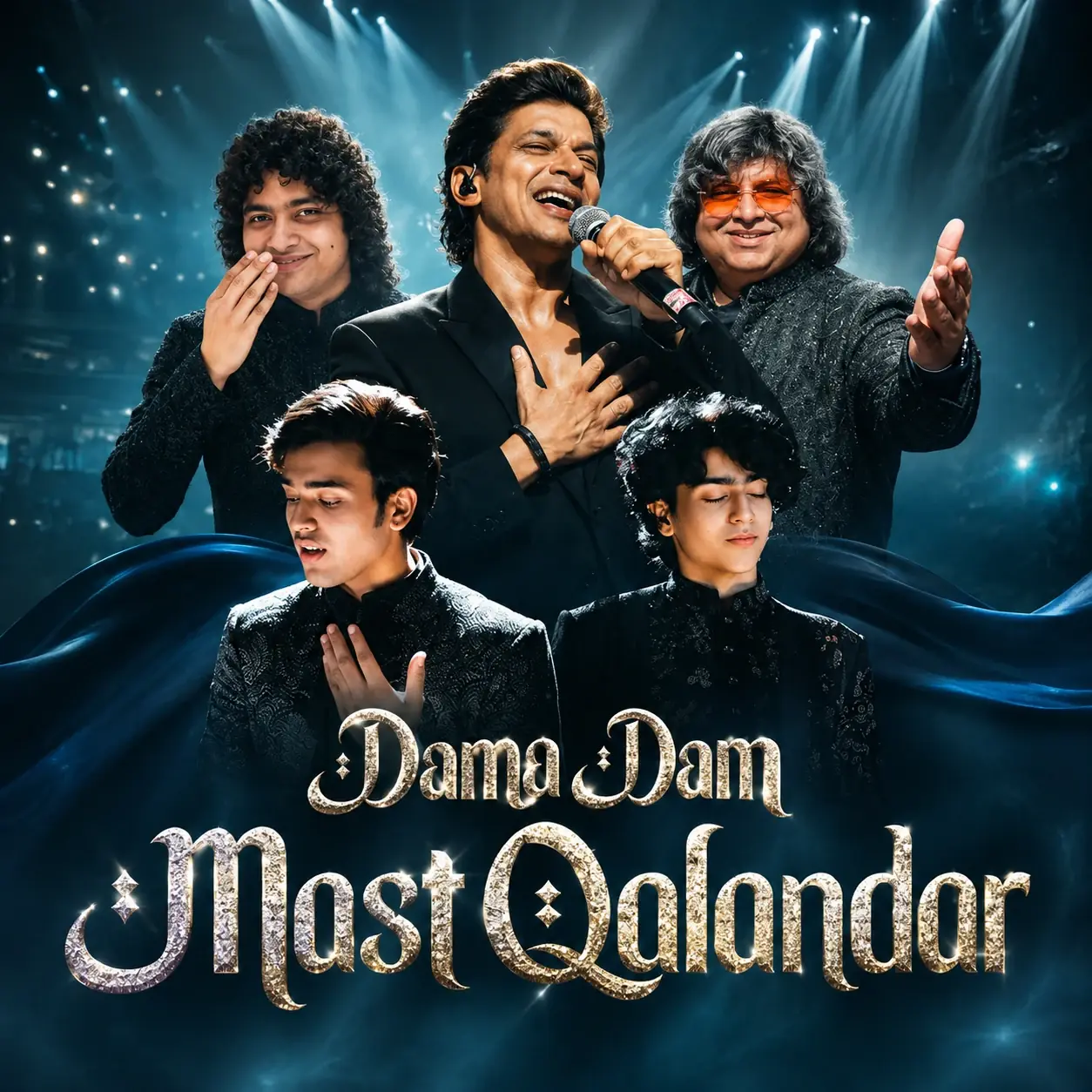
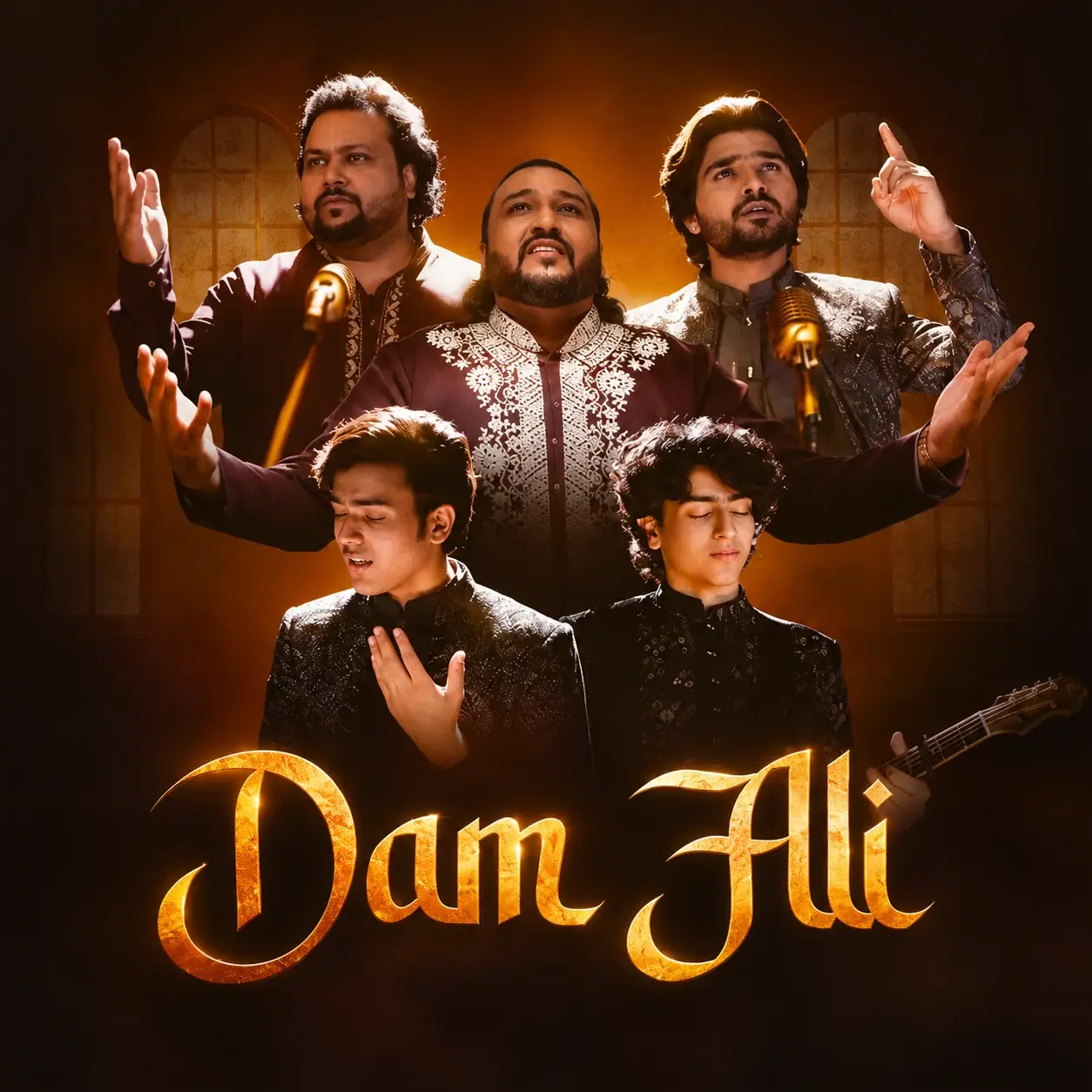
Qawwali has always absorbed new influences, and it is currently living a second life in film music, independent releases and fusion. BacXtage’s own catalogue is part of that story. Its founders, Rameez & Sohail, are third-generation members of the Sabri family of musicians. Season 1 includes the qawwali “Dam Ali”, sung by Shabab Sabri, Salman Ali and Danish Sabri as a tribute to Hazrat Ali, and “Ik Pal”, featuring the Sabri Brothers with Shabab Sabri and Rayan Sabri. Our article on “Damadam Mast Qalandar” traces how one of the most famous Sufi songs travelled through the centuries into a BacXtage release.
Where should a beginner start listening?
- Start with a classic Sabri Brothers recording such as “Tajdar-e-Haram”.
- Listen to a long live performance from start to finish to feel the arc.
- Then hear how the tradition sounds now: watch BacXtage’s qawwali releases.
Questions people also ask
Who invented qawwali?
Qawwali is widely attributed to the 13th-century poet and musician Amir Khusrau, a disciple of the Chishti Sufi saint Nizamuddin Auliya in Delhi. Some scholars argue the form took its fully distinct shape later, building on Khusrau’s foundations.
What instruments are used in qawwali?
A typical qawwali ensemble uses harmonium, tabla and/or dholak, and the rhythmic hand-clapping of the chorus, led by one or two lead singers.
What language is qawwali sung in?
Qawwali is commonly sung in Urdu, Punjabi, Hindi and Persian, and regional forms use languages such as Purbi and Braj.
Is qawwali the same as Sufi music?
Qawwali is one form of Sufi music. Sufi music is a broader term that also includes forms such as kafi and dhamaal.
Sources & further reading
- Qawwali — Wikipedia
- Qawwali — Encyclopedia.com
- Sabri Brothers — Wikipedia
- Sabri Brothers: artist profile — Nonesuch Records
- Desi Tadka Music presents “Dam Ali” — First India, Jul 2025
Share this article

BacXtage Editorial Team
Editors, writers and music researchers at BacXtage
The BacXtage editorial desk covers independent Indian music, Sufi and qawwali traditions, artist development and the stories behind every BacXtage release.
- Documents every BacXtage Season 1 release and its credits
- Works directly with the BacXtage artist roster and community team
- Fact-checks against official credits, published press and reference works